
Indian Ringneck Care

A trusted guide to raising confident, healthy Indian Ringnecks at home.

From first setup to daily routines, our care advice helps new owners make calm, informed decisions for pet Ringnecks with welfare and long-term companionship in mind.

Join Buyer Waitlist
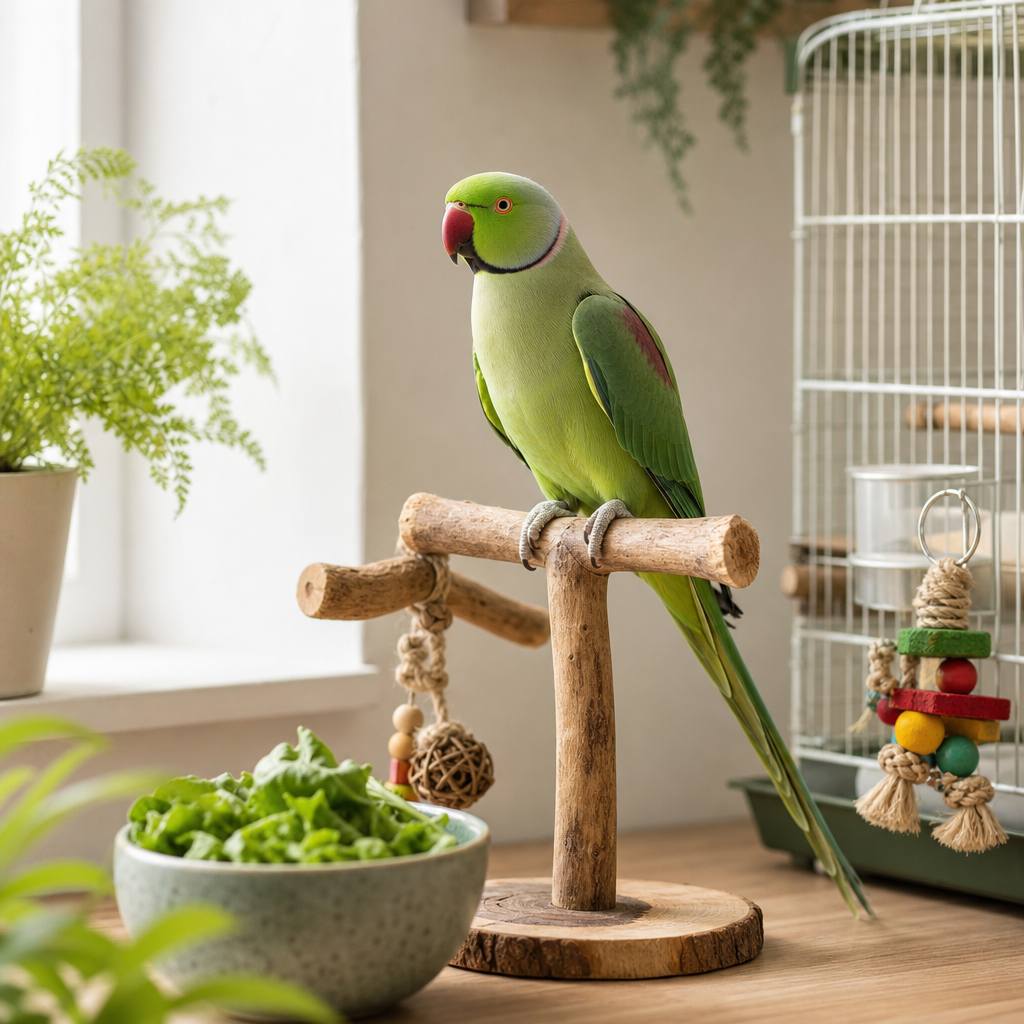
Indian Ringneck perched beside a natural wood stand in a bright home care corner with toys and fresh greens

Care essentials

Indian Ringneck care guides for everyday ownership

Practical guidance to help you assess fit, build healthy routines, and support confident, social birds at home.

Temperament

Intelligent and expressive birds that thrive with calm, consistent handling and predictable routines.

Housing

Provide a spacious, secure cage with safe perch variety and daily out-of-cage flying opportunities.

Enrichment

Rotate foraging toys, shreddables, and problem-solving activities to prevent boredom and stress.

Diet

Base meals on quality pellets and fresh produce, with seed offered in measured, species-appropriate portions.

Socialisation

Daily positive interaction builds trust, improves recall, and supports stable behavior in family settings.

Care Questions

Indian Ringneck care FAQ for first-time owners

Quick answers to the practical questions most families ask before bringing home an Indian Ringneck.

Are Indian Ringnecks suitable family pets?
Yes, when expectations are realistic. They are intelligent and engaging, but they need gentle handling, daily structure, and a home that respects their independence.
Do Indian Ringnecks really learn to talk?
Many do, and some develop clear vocabularies. Consistent interaction, repetition, and trust matter more than speed, and every bird progresses at its own pace.
How noisy are they day to day?
They are not silent birds. Most households can manage the noise with routine and enrichment, but short daily calls and occasional loud moments are normal.
Do they need another bird as a companion?
A single Ringneck can thrive with strong human interaction. If your schedule is limited, we can advise whether a paired setup or adjusted enrichment plan is better.
How much daily time commitment should I plan?
Plan for meaningful daily contact, out-of-cage time, feeding prep, and cage hygiene. Consistency matters more than occasional long sessions.
What should beginners expect in the first months?
Expect an adjustment phase while trust builds. Gentle routine, patient training, and clear boundaries create the best long-term personality and handling results.

Need personalised guidance before deciding? Contact our aviary team for practical advice.